El Paso · West Texas · Las Cruces · Southern New Mexico Monday–Friday · 9:00 AM–5:00 PM Mountain Time

Concrete GPR scanning · El Paso & the Borderland

Concrete scanning before the first cut.

Know where to look before you core, drill or saw. We scan the planned work area, mark supported findings and explain what the data can—and cannot—show.

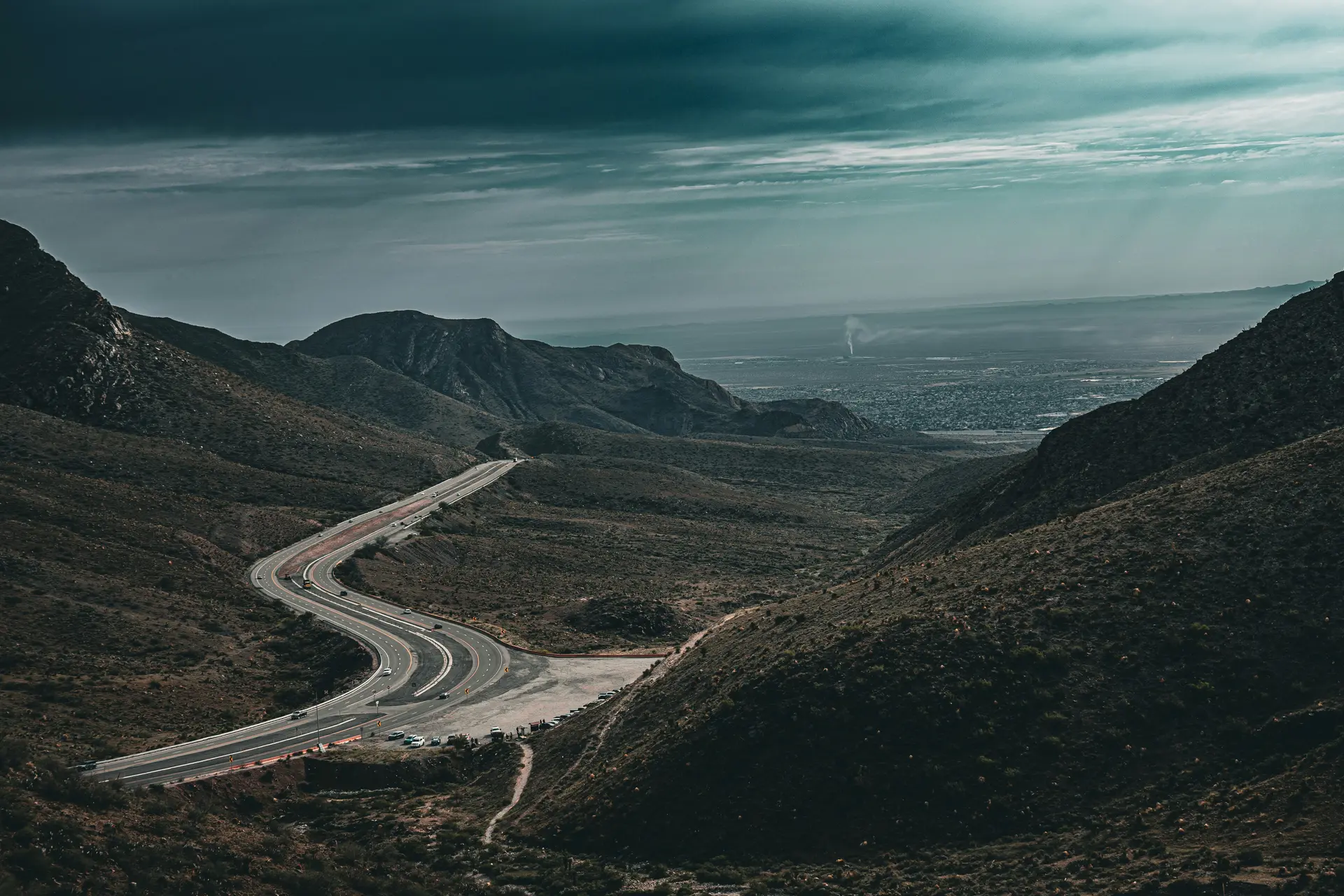
A road winding through the Franklin Mountains above El Paso.
Photo: Edwin Rodriguez / Unsplash

01 / The work

A clear plan starts with a scan.

Concrete scanning gives your crew more information at the exact places it plans to penetrate.

Ground-penetrating radar can help locate reinforcement, post-tension tendons and embedded conduit around proposed cores, cuts and anchors. We mark supported responses on the surface and flag areas where the interpretation is uncertain.

What the visit looks like

  1. 01

    Define the penetration

    Share the proposed core, cut or anchor locations, sizes and depth if known.

  2. 02

    Scan and mark

    We scan the agreed area, mark supported targets and flag inconclusive zones.

  3. 03

    Review the limits

    Use the markings and photographs to plan the work; a scan does not certify an area clear.

02 / Beyond the slab

The right method for what is below.

For work beyond concrete, we trace private utilities, investigate focused subsurface questions and narrow suitable cable-to-ground faults.

Illustrative rendering

Private utility locating

We use electromagnetic equipment to trace conductive utilities and tracer wire, then add GPR when the site supports a radar search. The work is limited to the agreed area and does not replace an 811 ticket.

Service details
Illustrative rendering

GPR investigation

A focused GPR survey can investigate buried structures, disturbed ground, possible voids or changes beneath a slab or paved surface. Soil, surface access and target depth affect what can be resolved.

Service details
Illustrative rendering

Fault locating

For a buried cable leaking current to ground, an A-frame follows the voltage gradient in the soil and narrows the repair area. This method does not apply to every type of cable failure.

Service details
See all services
Caliche caprock and rocky terrain in an arid desert landscape.
Photo: USGS / public domain

03 / The ground beneath us

The ground changes the answer.

The Borderland is not one uniform subsurface.

Dry sand and gravel can give radar good penetration. Clay, salts, moisture, caliche layers, rocky fill, target depth and surface access can reduce clarity or create competing reflections.

We test the conditions on site and explain when the method is limited.

Can be favorable
Dry sand · dry gravel · open access
Can reduce clarity
Clay · salts · moisture · caliche · rocky fill

04 / Private lines

Know what 811 may not mark.

Start with 811. Then ask about private utilities on your property.

Private lines beyond a meter or service point may not be included in 811 markings. Common examples include irrigation, site lighting, power to gates or detached buildings, and private water, sewer, gas or communications lines.

HDSL locates private lines within the agreed area. This work supplements and does not replace Texas811 or New Mexico 811.

Residential locating is normally quoted at a flat rate.

If the property or scope differs materially from what was described, we stop and discuss price or scheduling before work begins.

Tell us about the property

05 / What you keep

Findings you can work from.

Surface marks and a record of the agreed work.

Deliverables are matched to the job. Every scope states the requested area, methods, findings, exclusions and limitations.

Surface markings

Marks in the requested area, using recognized colors where applicable.

Photographs

A visual record of the completed markings before we leave.

Documentation

Job records, reports or mapping files when included in the quote.

A backhoe at a barricaded nighttime street excavation.
Photo: Eugene Chystiakov / Unsplash

Scheduling

Short-notice scheduling.

Next day

Quoted separately.

Same day or after hours

Quoted separately at a higher rate.

Availability is not automatic. Call 915-216-7360 to confirm the scope, rate and schedule.

Notes from the field

Ground Truth

The field blog for better questions before work starts.

Read practical guides, technical explainers and sourced industry stories. Every Ground Truth article keeps its sources and review date.

Read Ground Truth

Start a project

Tell us where you plan to work.

Planning a core, saw cut or anchor?

Send the job address, proposed penetration locations and sizes, slab details if known, and timing. For other locating work, describe the target and work area. We will confirm the right scope.

Project details

Send the project details.

We will review the scope and follow up with a quote or questions.

Best number to reach you on.

Only if you’d rather we email than call.

City, and roughly where on the property.

What you’re planning to cut, core, dig or track down — and roughly how big the area is.

We will review your request during business hours. For next-day, same-day or after-hours work, call 915-216-7360 to confirm availability.

Your details are used only to respond to your request. We don’t share them or add you to a list.

Call 915-216-7360